 Albemarle Independent College


 Albemarle Independent College
IGCSE Course Outline
What is IGCSE?
IGCSE Biology
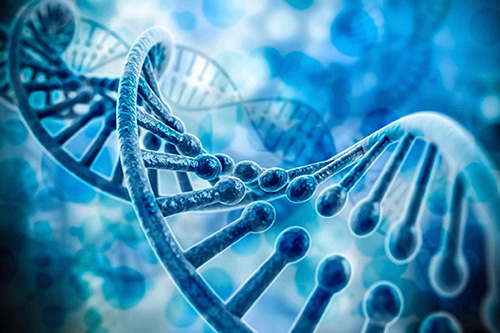
IGCSE Biology is a cutting edge subject that allows you to develop and sustain an enjoyment in the understanding of how living things function and interact with each other. It explores various traditional biological themes such as evolution, cell biology, inheritance and ecology, and also includes aspects of science appropriate for the 21st century such as the use of biotechnology in food production, selective breeding, genetic modification and cloning.
It is useful whether or not you plan to study the subject at A level, due to its immediate relevance to everyday living. It also increases awareness of the tremendous recent advances made through research in the biological sciences.
It enables you to acquire knowledge and to develop an appreciation for the significance of biological facts, concepts and principles, and the skills needed for their use in new and changing situations.
You will learn to form hypotheses and design experiments to test them. You will also appreciate the importance of accurate experimental work and scientific report writing. The course provides a sound foundation for progression to AS level Biology and to other comparable post-16 qualifications.
What topics will I study?
The subject is divided into five topics:
- The nature and variety of living organisms
- Structures and functions in living organisms
- Reproduction and inheritance
- Ecology and environment
- Use of biological resources
| BIOLOGY (PEARSON) - Summary of content at IGCSE | ||||||||||||||||||
The course is straightforward, linear and single tiered, which assesses investigative skills and knowledge through examination. The exam consists of two papers which are available for assessment in May and June and are externally marked. The papers are made up of mainly short-answer structured questions, including calculations, with some requiring longer prose answers. As there is no practical coursework, knowledge of experimental work and scientific methods completed in class are tested in these written papers. Both papers cover all topics, but some additional material is tested in Paper 2. The percentage weightings of the papers are shown below:
Structure of the Course The course will be taught for 3 x 1 hour lessons per week. Some lessons will involve practical work, and practical skills will be developed in preparation for assessment in the final written exams. Homework is set after each class and is an essential part of the course. Mock exams take place each month with formative weekly tests. What are the challenges of the course?
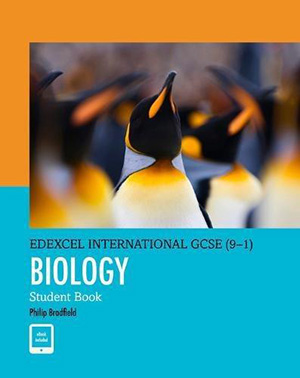
Core Textbook The following textbook is recommended for this course: Potter S and Bradfield P; Edexcel International GCSE (9-1) (Pearson Education 2017) ISBN 978-0435185084
Introductory Reading The science sections of good quality newspapers and New Scientist magazine. Origins: How The Earth Made Us By Lewis Dartnell (2019) ISBN-13: 978-1847924353 This fascinating book will inspire students and open their eyes to the links between biology and other scientific disciplines. | ||||||||||||||||||
 (+44) 20 7409 7273